The Moon has a brand-new crater — and this one was made by us. In the early hours of Wednesday, August 5, a discarded upper stage from a SpaceX Falcon 9 rocket slammed into the lunar surface at more than 5,400 mph, ending an 18-month drift through space with a violent, scientifically fascinating finale.
The impact, which NASA estimates occurred around 2:35 a.m. Eastern Time near the Moon's Einstein Crater, poses no danger to Earth. But it has handed scientists a rare natural experiment — and reignited a global conversation about the growing problem of space debris beyond Earth's orbit.
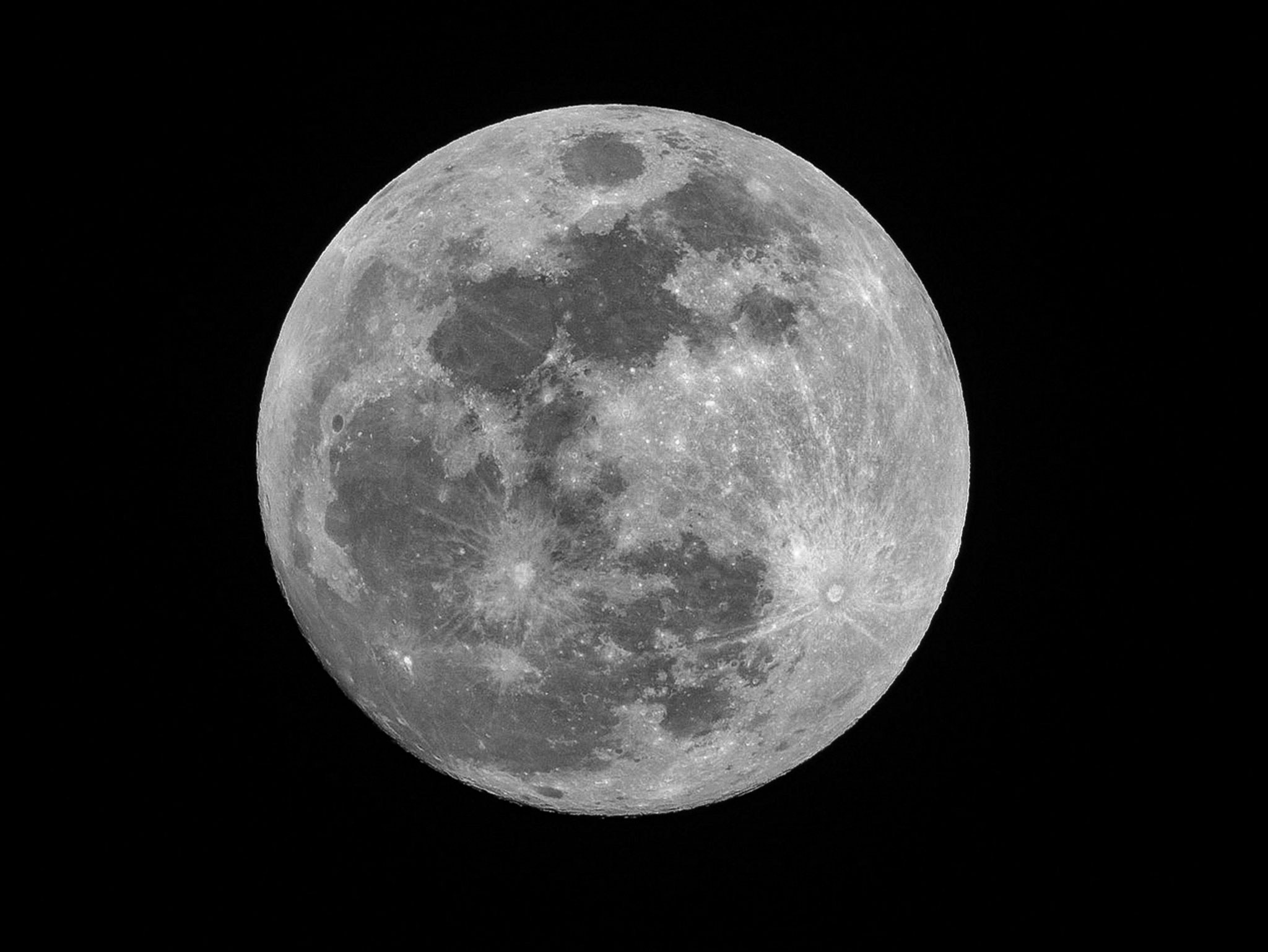
The Moon's surface is scarred by billions of years of impacts — this week, humanity added one more. (Photo: Unsplash)
How a Rocket Ended Up on a Collision Course With the Moon
The story begins on January 15, 2025, when a Falcon 9 lifted off from Florida carrying two commercial lunar landers. The rocket did its job flawlessly, sending its payloads on their way to the Moon. But its upper stage — the roughly 8,818-pound (4-metric-ton) section that performs the final push out of Earth orbit — had no fuel left to dispose of itself safely.
Instead of burning up in Earth's atmosphere or settling into a stable "graveyard" orbit, the spent stage entered a chaotic, high-altitude loop around the Earth-Moon system. For over a year, it tumbled through space, its path nudged continuously by the gravity of the Earth, Moon, and Sun, as well as pressure from solar activity.
Those tiny nudges added up. Trackers watching the object realized months ago that its wandering trajectory would eventually intersect with the Moon itself — an unplanned return with an unavoidable ending.
The Impact: 5,400 MPH and a 60-Foot Scar
When the stage finally struck the lunar surface near the Einstein and Bell craters on the Moon's western limb, it did so with tremendous energy. Traveling at over 5,400 mph — roughly seven times the speed of sound on Earth — the four-ton cylinder was instantly vaporized.
Here's what the collision left behind, according to early estimates:
- A new crater roughly 60 feet (18 meters) wide and about 12 feet deep — small by lunar standards, but easily detectable from orbit.
- A glowing debris plume that briefly rose above the surface before falling back under lunar gravity.
- Spectral fingerprints of sodium and lithium gas, detected by the European Southern Observatory's Very Large Telescope, which watched the plume shimmer for five to ten minutes after impact.
Because the Moon has no atmosphere, there was no fireball streaking across a sky and no sound. Just a silent flash, a burst of vaporized metal and regolith, and a fresh wound on a surface that has collected them for four billion years.
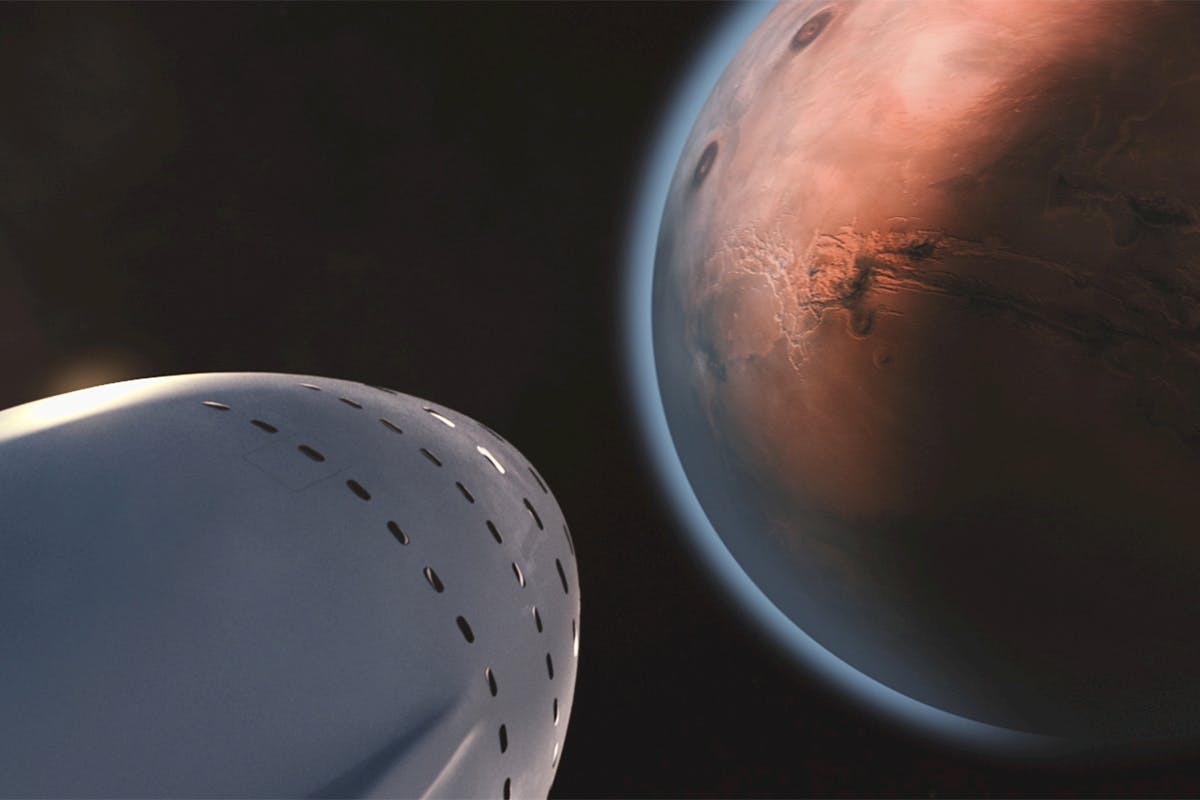
Telescopes on Earth detected sodium and lithium in the impact plume within minutes. (Photo: Pexels)
Why Scientists Are Actually Excited
It might sound like an embarrassing accident, but for lunar researchers, this is a gift. Controlled impact experiments on the Moon are rare and expensive — NASA deliberately crashed a rocket stage into the Moon in 2009 during the LCROSS mission specifically to study the debris plume, and that mission cost tens of millions of dollars.
This week, scientists got a similar experiment for free. Because trackers knew the impact was coming, telescopes were pointed and orbiters were ready:
- NASA's Lunar Reconnaissance Orbiter (LRO) is expected to capture before-and-after images of the impact site, letting researchers measure the new crater precisely.
- South Korea's Danuri orbiter will also image the region, adding a second, independent dataset.
- Ground-based observatories, including the Very Large Telescope in Chile, captured the chemistry of the plume itself — data that reveals what both the rocket and the lunar soil are made of.
Comparing a known object — engineers know exactly what a Falcon 9 upper stage weighs and what it's made of — against the crater it produces helps scientists calibrate models of how impacts work. Those same models are used to estimate the age of surfaces across the solar system and to assess the threat posed by asteroids headed toward Earth.
The Bigger Issue: Space Junk Is No Longer Just Earth's Problem
This is not the first time human hardware has accidentally hit the Moon. In March 2022, a spent rocket stage — widely assessed to be from a Chinese Long March mission — struck the far side, leaving an unusual double crater. Dozens of other spacecraft and stages have hit the Moon deliberately or otherwise since the 1950s.
But the frequency is set to rise sharply. With NASA's Artemis program, commercial lunar landers, and missions from China, India, Japan, and others all targeting the Moon this decade, cislunar space — the region between Earth and the Moon — is getting crowded. Unlike low Earth orbit, there is no comprehensive tracking system and no binding international rules for disposing of hardware out there.
Key concerns experts keep raising:
- No one is formally responsible for tracking objects in high orbits or cislunar space; this week's impactor was followed largely by volunteer astronomers and independent trackers.
- Future lunar bases and landers could someday be at risk if uncontrolled impacts become routine.
- Heritage sites — like the Apollo landing zones — currently have no enforceable protection from debris strikes.
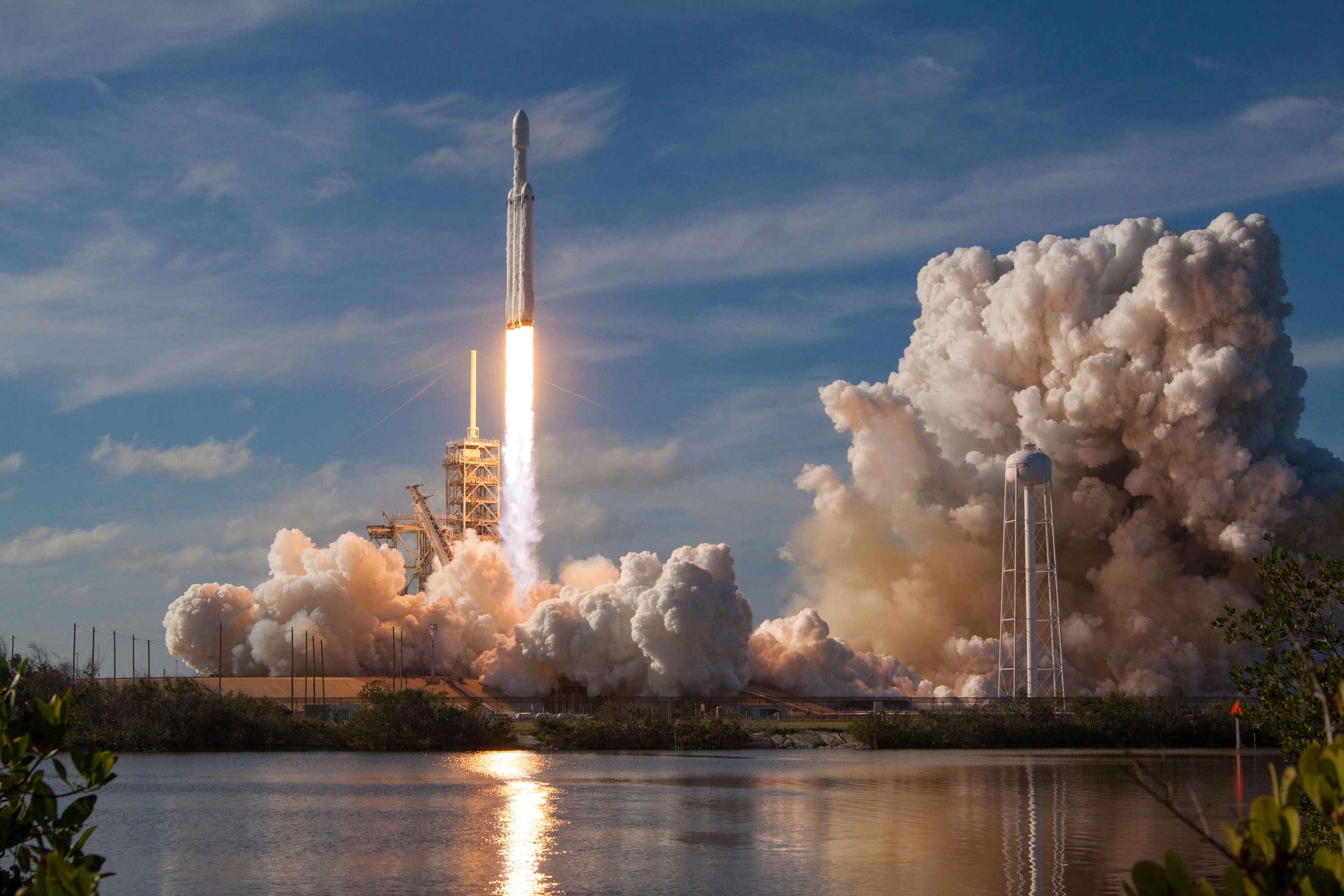
Falcon 9 upper stages that push payloads beyond Earth orbit often can't be safely deorbited. (Photo: Unsplash)
Could This Have Been Prevented?
In this case, probably not easily. Upper stages that send payloads to the Moon or deep space frequently exhaust their fuel completing the mission, leaving nothing for a disposal burn. Some missions plan trajectories so the spent stage escapes into orbit around the Sun; others accept that the stage will loop unpredictably until gravity decides its fate.
What the incident does highlight is a policy gap. As launch rates climb, space agencies and companies will face growing pressure to plan end-of-life disposal for every piece of hardware they send beyond Earth orbit — not just the satellites in it.
What Happens Next
Over the coming weeks, the Lunar Reconnaissance Orbiter will pass over the Einstein Crater region and attempt to photograph the fresh impact scar. Comparing those images with pre-impact photos will confirm the crater's exact size and shape, and the results will feed directly into impact-physics research.
Meanwhile, the debris plume data collected by the Very Large Telescope is already being analyzed. The detection of lithium — likely from the rocket's batteries — alongside sodium offers a rare chance to study how man-made materials disperse in a lunar impact.
One four-ton piece of space junk is gone. The questions it left behind — about who tracks what we launch, and who cleans up after us beyond Earth — are only getting bigger.
What do you think — should there be international rules for disposing of rockets sent beyond Earth orbit? Share your take in the comments below, and follow the blog for more science and space coverage.
Post a Comment