Updated September 28, 2026 — mission still in progress at time of writing.
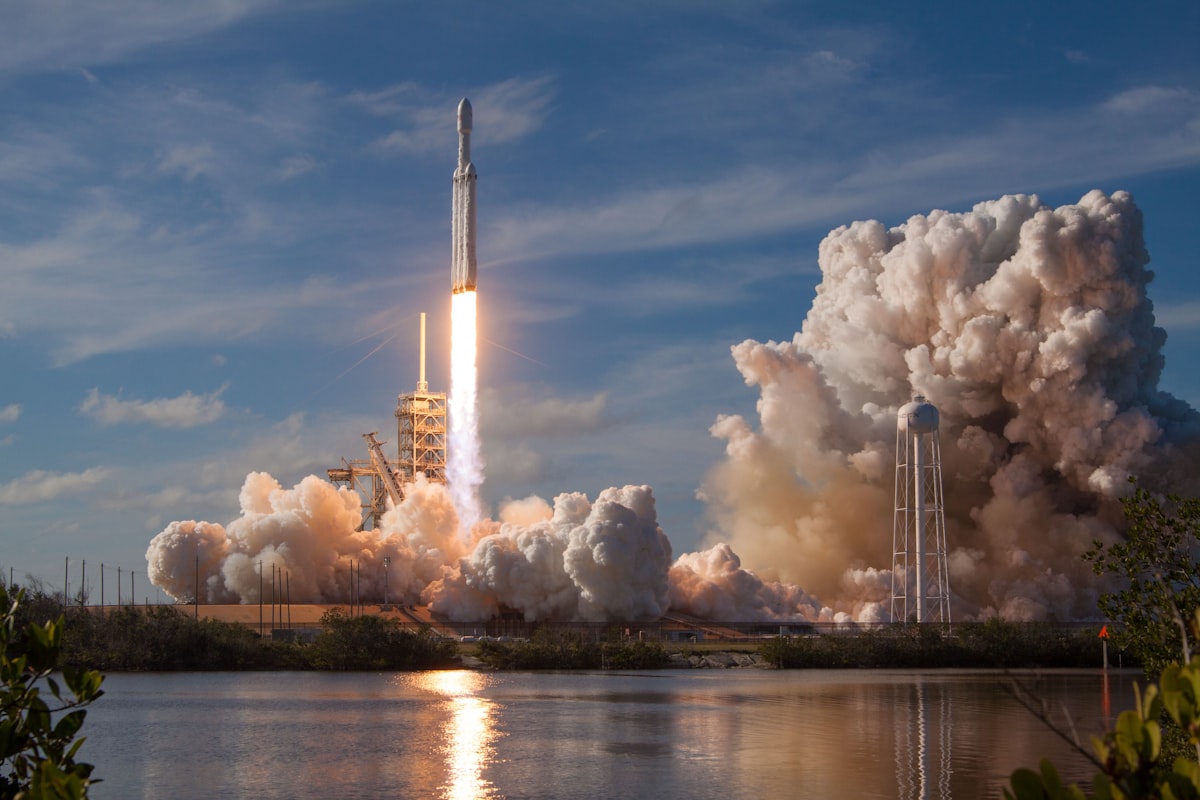
Illustrative image. Photo via Unsplash.
For years, the world's largest rocket has blazed into the sky, flown halfway around the planet and come back down again — without ever quite staying up. On Monday morning, that changed. SpaceX's Starship reached orbit for the first time, and within the hour it was releasing working internet satellites into space.
It is a milestone that space watchers have been waiting on since Starship's first test flight in 2023. And its effects could stretch from your home broadband connection all the way to NASA's plans to return astronauts to the Moon.
What Happened on Starship Flight 14
The 14th flight of the fully stacked Starship system lifted off from SpaceX's Starbase facility in South Texas at about 8:48–8:50 a.m. ET on September 28, 2026. It was the program's third integrated test flight of the year, and the first flown with a mission profile built around staying in orbit.
Here are the key facts so far:
- Orbit achieved: After a short coast, the upper-stage spacecraft (Ship 41) fired its engines for an orbital insertion burn and entered a sustained orbit roughly 170 miles (about 275 km) above Earth.
- An engine lost on the way up: One of the ship's six Raptor engines failed during ascent. About 22 minutes into the flight, SpaceX's team judged the vehicle healthy enough to proceed, since that engine was not needed to reach orbit.
- Real payload delivered: Starship began deploying 26 Starlink V3 satellites — the first operational payload it has ever carried — and SpaceX confirmed contact with the first satellites after they left the cargo bay.
- Booster return: The Super Heavy first stage separated as planned and made a soft splashdown in the Gulf of Mexico rather than attempting a tower catch.
- Long day ahead: The flight plan runs about 10 hours and roughly six orbits, ending with a single-engine deorbit burn and a controlled splashdown in the Pacific Ocean west of Chile.
Satellites that watch the ship
Three of the 26 Starlink satellites carry cameras. Their job is to photograph Starship's heat shield while it is in orbit, giving engineers a close look at the thermal protection tiles before the vehicle plunges back through the atmosphere. Heat shield performance has been one of the program's most persistent challenges.
Why Reaching Orbit Is Such a Big Deal
Earlier Starship flights were suborbital: fast and high, but on a path that brought them back down before completing a full lap of the planet. That was deliberate. It kept the risk of an uncontrolled vehicle stuck in orbit low while SpaceX refined the design.
Going fully orbital proves something different. It shows that the current generation of Starship can carry a meaningful payload to a stable orbit, keep its systems running for hours, and — if the rest of today goes to plan — relight an engine and come home under control. Industry analysts have described it as removing one of the program's largest open questions.
Elon Musk set expectations high before launch, calling it the most important Starship launch yet and insisting the new design "is capable of full reusability."

Starship is flying about 170 miles above Earth. Photo via Unsplash.
What Starlink V3 Satellites Mean for Internet Users
Starlink already beams broadband to millions of customers from thousands of satellites launched mostly on SpaceX's smaller Falcon 9 rocket. The new V3 satellites are much larger and more capable — too big to fly efficiently on Falcon 9, which is exactly why they need Starship.
- More capacity per launch: Reports indicate a full Starship load of about 60 V3 satellites could add roughly 60,000 Gbps of network capacity — many times what a single Falcon 9 mission delivers.
- Faster, less congested service: More capacity generally means higher speeds and fewer slowdowns in busy areas.
- Lower orbits: V3 satellites are designed to fly lower, which can help reduce latency.
Today's batch of 26 is a partial load and a proving run. The real test is whether SpaceX can turn Starship launches into a routine cadence.
The Road to the Moon: Starship and NASA's Artemis
Beyond Starlink, NASA is watching closely. A modified version of Starship has been selected as the human landing system for NASA's Artemis program, which aims to put astronauts back on the lunar surface.
Flight 14 did not attempt a Moon landing or the orbital refueling that a lunar Starship will need. But none of those later steps are possible without first mastering reliable trips to orbit. A lunar Starship must be topped up in space by several tanker flights, which means SpaceX has to launch often, dock vehicles and store super-cold propellant for long periods.
What still has to go right
- A clean single-engine deorbit burn roughly nine hours into the mission.
- Survival of the heat shield through reentry.
- A controlled landing flip and splashdown in the Pacific.
- Follow-on demonstrations of ship-to-ship propellant transfer in later flights.

Satellite internet networks rely on frequent, affordable launches. Photo via Unsplash.
Analysis: A Turning Point, Not a Finish Line
It is worth keeping perspective. Losing an engine on ascent is a reminder that Starship remains a test vehicle, and the day's hardest phase — reentry — still lies ahead. Previous flights have seen dramatic successes followed by setbacks.
Still, the shift is significant. Starship has moved from proving it can fly to proving it can work: carrying paying cargo, operating in orbit and supporting a commercial network. If SpaceX can repeat this regularly, and eventually reuse both stages, the cost of reaching space could fall sharply. That would affect everything from satellite internet and scientific missions to national security launches and crewed exploration.
The Bottom Line
September 28, 2026, will likely be remembered as the day Starship stopped being just an experiment. SpaceX's Starship reached orbit, deployed operational Starlink V3 satellites and opened a new chapter for commercial spaceflight and NASA's lunar ambitions. The final verdict on Flight 14 arrives with this evening's reentry and splashdown.
What do you think — is Starship's orbital debut the start of a new space age, or is it too early to celebrate? Share your thoughts in the comments, and follow this blog for updates as the mission wraps up.
Sources: CNBC, NPR, CNN, Space.com, ABC News, NASASpaceFlight.com, Scientific American.
Post a Comment