
Imagine flipping a switch and watching a single type of brain cell turn on or off. That idea once sounded like science fiction. This week it earned three scientists the most famous prize in science.
The Nobel Prize 2026 season opened on Monday, October 5, with the Nobel Prize in Medicine going to American neuroscientist Karl Deisseroth and German researchers Peter Hegemann and Georg Nagel. They were honoured for discoveries that led to optogenetics, a technique that uses light to control nerve cells in a living brain.
With the physics prize up next and four more announcements to follow, here is what you need to know about the winners, the science, and the rest of Nobel week.
Who Won the 2026 Nobel Prize in Medicine?
The Nobel Assembly at Sweden's Karolinska Institutet announced the award jointly to three scientists, saying they were honoured "for their discovery of a molecular switch for nerve cells."
- Karl Deisseroth, 54 – professor at Stanford University, United States
- Peter Hegemann, 71 – neuroscience professor at Humboldt University of Berlin, Germany
- Georg Nagel, 73 – biophysics professor at the University of Würzburg, Germany
The three will share the prize sum of 12 million Swedish kronor, roughly $1.2 million. That figure is itself new: the Nobel Foundation raised the award from 11 million kronor in 2025.
According to Nobel Assembly secretary-general Thomas Perlmann, all three laureates said the same thing when they got the call: they were delighted to share the honour with the other two, whom they consider friends.
What Is Optogenetics? A Light Switch for the Brain
The human brain contains billions of nerve cells of many different types, all firing in tangled networks. For decades, scientists struggled to figure out which cells were responsible for which behaviours. Older tools, like electrodes and drugs, tended to affect many cells at once.
Optogenetics changed that. The story begins not in a brain, but in pond-dwelling green algae that swim toward light. Nagel and Hegemann helped uncover the light-sensitive proteins these algae use, known as channelrhodopsins. When light hits them, they open and let charged particles flow into the cell.
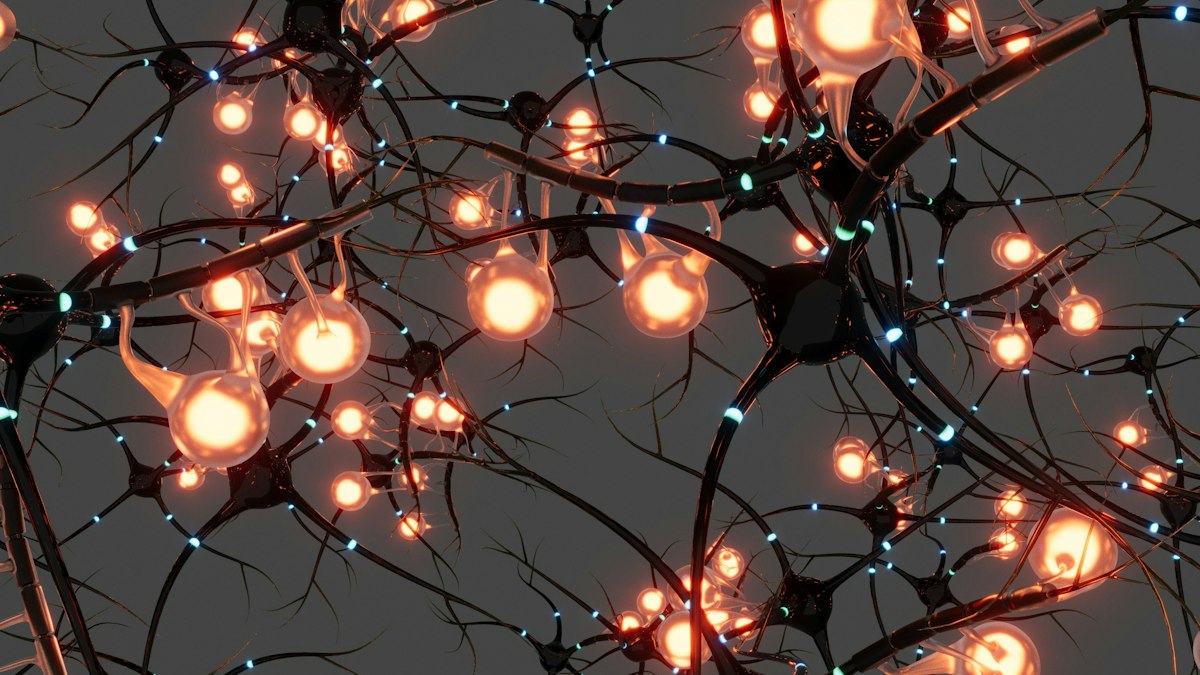
That is essentially how a neuron "fires." Deisseroth's team showed the protein could be placed into mammalian nerve cells, so a flash of light could switch those specific cells on. Later tools made it possible to switch them off, too.
How It Works in Practice
- Step 1: Researchers deliver the gene for a light-sensitive protein into a chosen type of nerve cell.
- Step 2: Only those cells produce the protein, leaving their neighbours untouched.
- Step 3: Light delivered through a thin optical fibre switches the targeted cells on or off in milliseconds.
- Step 4: Scientists watch how behaviour changes, revealing what those cells actually do.
"Optogenetics provides opportunities for mapping the brain in a way that we could once only dream of," said Per Svenningsson, chair of the Nobel committee.
Why This Nobel Prize Matters
The committee stressed that the technique is now used in laboratories around the world. It has become a standard tool for studying how specific cell types drive learning, fear, addiction and movement.
"Optogenetics has fundamentally altered our understanding of the brain," the Nobel Assembly said, adding that every day brings new discoveries toward solving how the brain works.
From the Lab Toward Patients
Most optogenetics work so far is basic research in animals, and it is important not to overstate how close it is to everyday treatment. Still, researchers see real medical promise.
One example highlighted after the announcement is hearing. Scientists hope light-based stimulation could improve cochlear implants, triggering the auditory nerve more precisely than the electrical devices used today. Better precision could mean clearer sound for people with severe hearing loss.
More broadly, knowing exactly which circuits misfire in conditions such as Parkinson's disease, depression or addiction could guide better-targeted therapies in the future, even if they do not use light directly.
A Reminder of the Value of Basic Science
Perhaps the biggest lesson is how the breakthrough began. Nobody set out to build a brain switch by studying algae. Curiosity about how a single-celled organism senses light ended up transforming neuroscience, a pattern Nobel committees have rewarded many times before.
Nobel Prize 2026 Announcements Schedule
The medicine prize traditionally opens Nobel week. Here is the full Nobel Prize announcements schedule for 2026 (all times CEST, "at the earliest"):
- Monday, Oct 5 – Physiology or Medicine (awarded: Deisseroth, Hegemann, Nagel)
- Tuesday, Oct 6, 11:45 – Physics, Royal Swedish Academy of Sciences, Stockholm
- Wednesday, Oct 7, 11:45 – Chemistry, Stockholm
- Thursday, Oct 8, 13:00 – Literature, Swedish Academy, Stockholm
- Friday, Oct 9, 11:00 – Peace, Norwegian Nobel Institute, Oslo
- Monday, Oct 12, 11:45 – Economic Sciences, Stockholm
The Peace Prize is often the most closely watched, and it is the only Nobel awarded in Oslo. Observers have suggested the committee may favour a broadly accepted laureate this year after the debate around 2025's winner, Venezuelan opposition leader María Corina Machado.
All laureates will receive their awards on December 10, the anniversary of Alfred Nobel's death, at ceremonies attended by the Swedish and Norwegian royal families.
Quick Facts: Nobel Prize 2026 So Far
- First prize announced: Physiology or Medicine, October 5
- Winning field: Optogenetics – controlling nerve cells with light
- Laureates' countries: United States (1), Germany (2)
- Prize money: 12 million SEK per category, up from 11 million in 2025
- Next up: Physics on October 6
The Bottom Line
The 2026 Nobel Prize in Medicine celebrates a tool rather than a single cure. But tools are what make cures possible. By turning a light-sensing algae protein into a precise switch for brain cells, Deisseroth, Hegemann and Nagel gave scientists a way to ask questions about the brain that simply could not be asked before.
With physics, chemistry, literature, peace and economics still to come, Nobel week is only getting started.
What do you think the Nobel committees will reward next? Share your predictions in the comments below, and follow this blog for updates as each 2026 Nobel Prize is announced throughout the week.
Sources: Nobel Assembly at Karolinska Institutet / NobelPrize.org; Al Jazeera with AFP and Reuters; Business Today. Images: Unsplash.
Post a Comment