China's space program reached a new milestone this week. The Shenzhou 23 spacecraft lifted off from the Jiuquan Satellite Launch Center on the night of May 24, 2026, carrying a three-member crew that includes Hong Kong's first-ever astronaut and one member who will stay in orbit for a full year. The mission marks a turning point for the Tiangong space station and for China's broader ambitions in human spaceflight.
A Historic Liftoff From Jiuquan
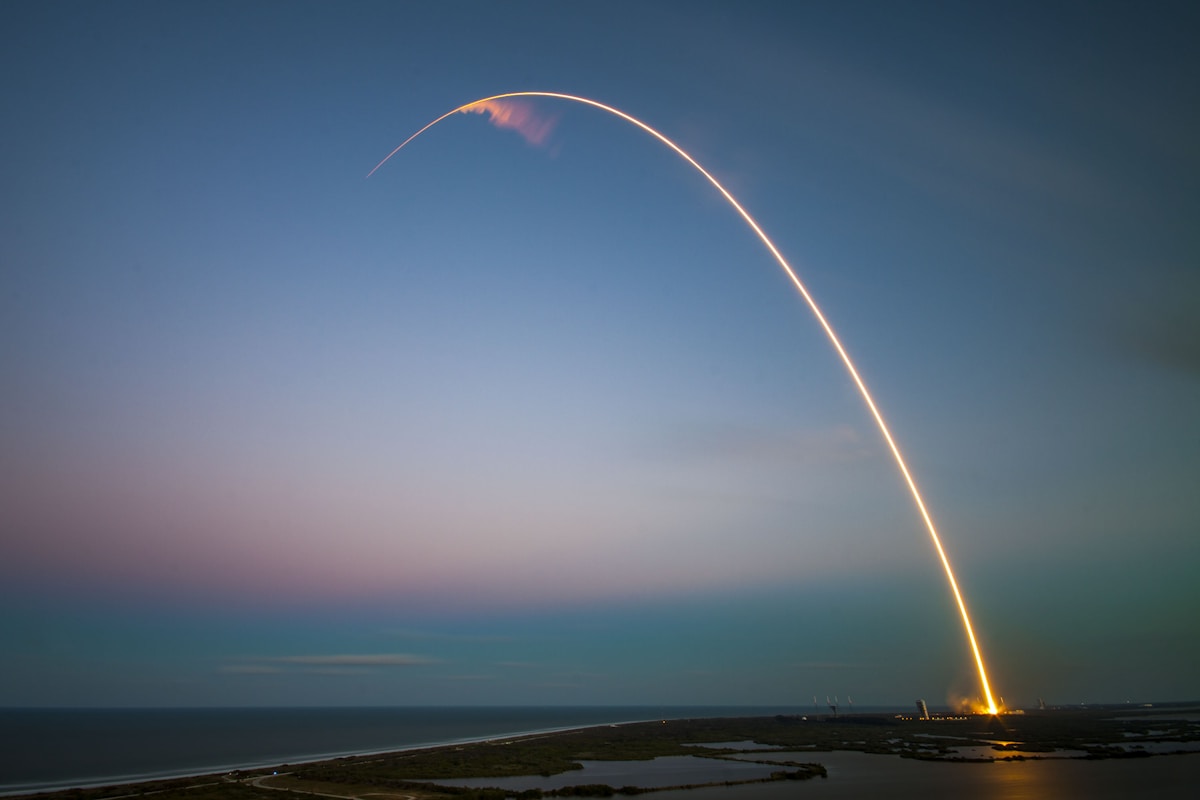
The Shenzhou 23 crewed spacecraft launched at 11:08 p.m. local time from the Jiuquan Satellite Launch Center in northwestern China. A Long March 2F rocket carried the capsule into low Earth orbit, where it docked with the Tiangong space station roughly six and a half hours later on May 25.
The launch was broadcast live across Chinese state media and drew large audiences in Hong Kong, where the mission has become a source of civic pride. Officials described the flight as a routine crew rotation, but several firsts make this rotation anything but ordinary.
Meet the Shenzhou 23 Crew
The three astronauts aboard Shenzhou 23 each bring a different background to the Tiangong space station:
- Zhu Yangzhu — Mission commander and a veteran of Shenzhou 16. He is the only crew member with prior spaceflight experience and will oversee the in-orbit handover with the Shenzhou 21 crew.
- Zhang Zhiyuan — Mission pilot and a first-time flier, responsible for spacecraft systems and docking operations.
- Lai Ka-ying — Payload specialist, the first person from Hong Kong to fly to space, and China's first female payload expert. A former Hong Kong Police Force superintendent, she holds a doctorate in computer science and was selected during China's fourth astronaut intake in 2024.
Lai's selection has been celebrated in Hong Kong as a generational moment. She is also the fourth woman ever to enter the Chinese space station, putting her in a small group of pioneering women aboard Tiangong.
Why a Year-Long Mission Matters

One member of the Shenzhou 23 trio will remain on Tiangong for approximately twelve months — the longest continuous stay ever attempted by a Chinese astronaut. Chinese officials say the extended mission is designed to study how the human body adapts to prolonged microgravity, a critical question for any future crewed missions to the Moon or Mars.
Year-long missions are not new in spaceflight. NASA astronaut Scott Kelly and Russian cosmonaut Mikhail Kornienko famously spent 340 days aboard the International Space Station from 2015 to 2016, and Russian cosmonaut Valeri Polyakov holds the all-time single-mission record at 437 days aboard the Mir station in the 1990s. China's first attempt at this duration signals that its human spaceflight program is moving from short visits to the kind of sustained presence required for deep-space exploration.
Key science goals of the extended stay
- Cardiovascular and bone-density changes during long-duration microgravity.
- Cognitive performance and sleep quality over many months in orbit.
- Radiation exposure trends beyond a typical six-month rotation.
- Crop-growth and life-support experiments that need uninterrupted human oversight.
Tiangong: A Permanent Foothold in Orbit
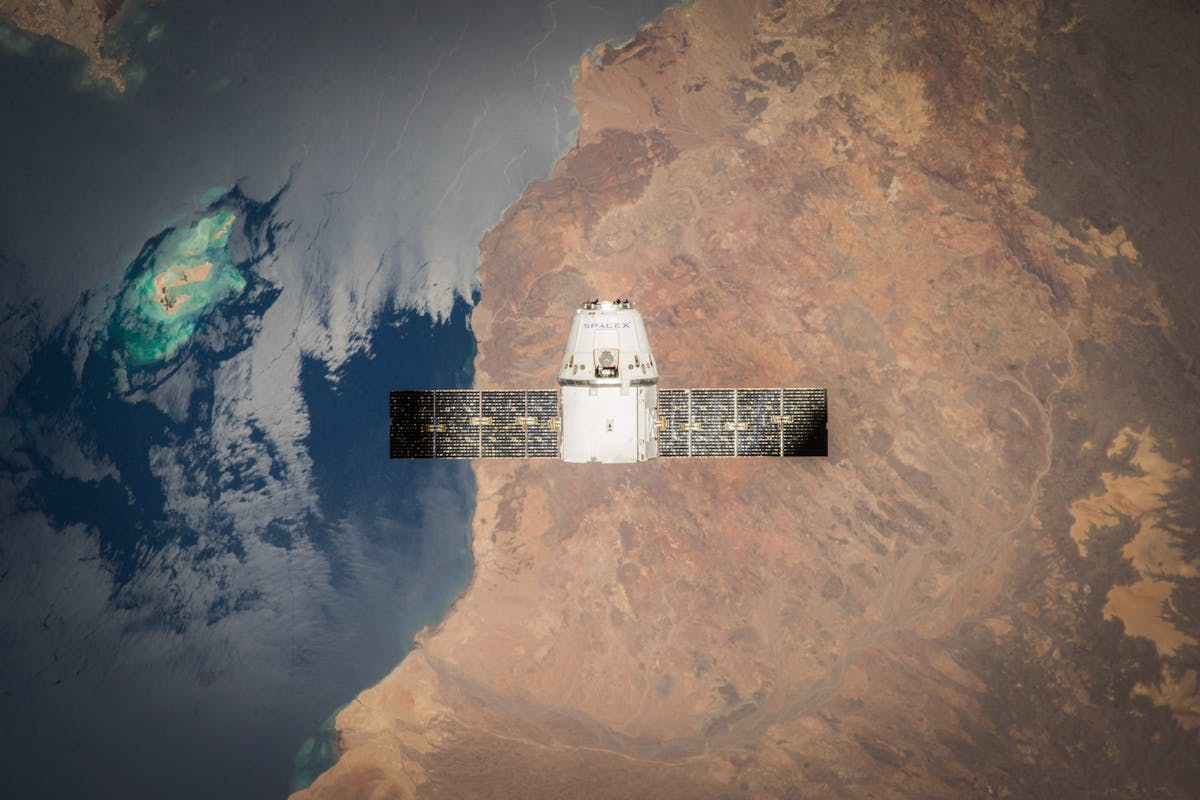
The Tiangong space station, whose name translates as "Heavenly Palace," became fully operational in late 2022. It is currently the only space station other than the International Space Station with a continuous human presence. Crew rotations now occur roughly every six months, and Tiangong is expected to remain in service well into the 2030s.
The Shenzhou 23 crew will overlap briefly with the Shenzhou 21 astronauts, who have spent more than 200 days in orbit. After handover, the Shenzhou 21 team will return to Earth, and Tiangong will continue around-the-clock operations under the new commander.
Tiangong at a glance
- Configuration: Three main modules — Tianhe (core), Wentian and Mengtian (laboratories) — arranged in a T-shape.
- Crew size: Three astronauts during normal operations, with brief handover periods of up to six.
- Orbit: Roughly 340 to 450 kilometers above Earth, completing about 16 orbits per day.
- Research focus: Microgravity physics, life sciences, materials, and Earth observation.
A Stepping Stone Toward the Moon
China has set an ambitious goal of landing astronauts on the Moon by 2030, and missions like Shenzhou 23 are part of the buildup. Long-duration data, life-support experiments, and operational confidence at Tiangong all feed into the lunar program. The country has also been developing a new heavy-lift rocket, a crewed lunar lander, and a next-generation spacecraft to carry astronauts beyond low Earth orbit.
If China succeeds, it would become only the second country to land humans on the Moon, more than six decades after the United States' Apollo program. Several international partners, including Pakistan, have also signed agreements to fly astronauts to Tiangong in the years ahead, adding a diplomatic dimension to the program.
What the Mission Means Globally
For the wider space community, Shenzhou 23 reinforces a trend that has been quietly reshaping low Earth orbit: human spaceflight is no longer a two-power story. China is now flying crewed missions on a steady cadence, training new astronauts every two to three years, and inviting collaborators from outside the traditional Western space alliance.
For Hong Kong, the symbolism is personal. Lai Ka-ying's flight gives the city a place in the modern era of human exploration and is expected to fuel new interest in STEM education and aerospace careers among young people there.
Reactions from around the world
International space agencies offered measured congratulations. NASA, the European Space Agency, and Russia's Roscosmos each acknowledged the launch as part of the growing global cadence of human spaceflight, even as cooperation between programs remains limited. Independent space-policy analysts described the year-long mission as a clear signal that Beijing intends to keep pace with — and in some areas overtake — established crewed programs.
Within China, state broadcasters carried the launch live, and clips of Lai Ka-ying waving from the pre-launch transfer bus spread quickly on Chinese social platforms. In Hong Kong, schools held watch parties and the city government issued public statements highlighting the milestone for local science education.
What to Watch for Next
Over the coming weeks, the Shenzhou 23 crew will begin a packed schedule of experiments and station maintenance. Expect frequent updates on spacewalks, robotic-arm operations, and the first batches of science data from the long-duration crew member. Key dates to keep on your calendar:
- First days in orbit: Shenzhou 21 handover, station familiarization, and initial medical checks.
- First month: Opening rounds of biomedical experiments and at least one planned extravehicular activity.
- Mid-mission: Resupply by an uncrewed Tianzhou cargo ship and possible visit by a robotic experiment module.
- End of mission: Two crew members return aboard Shenzhou 23, while the year-long flier continues with the next rotation.
The Bottom Line
Shenzhou 23 is more than a routine crew rotation. It carries Hong Kong's first astronaut, marks China's first attempt at a year-long mission, and brings the Tiangong space station one step closer to a future in which long, complex human missions become normal. As the crew settles in, expect a steady stream of imagery, experiments, and milestones over the next twelve months.
Stay with us for updates on the mission, the science, and the road to China's first crewed lunar landing. Subscribe, share this story with a friend who loves space, and tell us in the comments which experiment you're most excited about.
s
Post a Comment