The IUCN has officially uplisted emperor penguins to Endangered. Here's why Antarctica's most iconic bird is in trouble and what scientists say comes next.
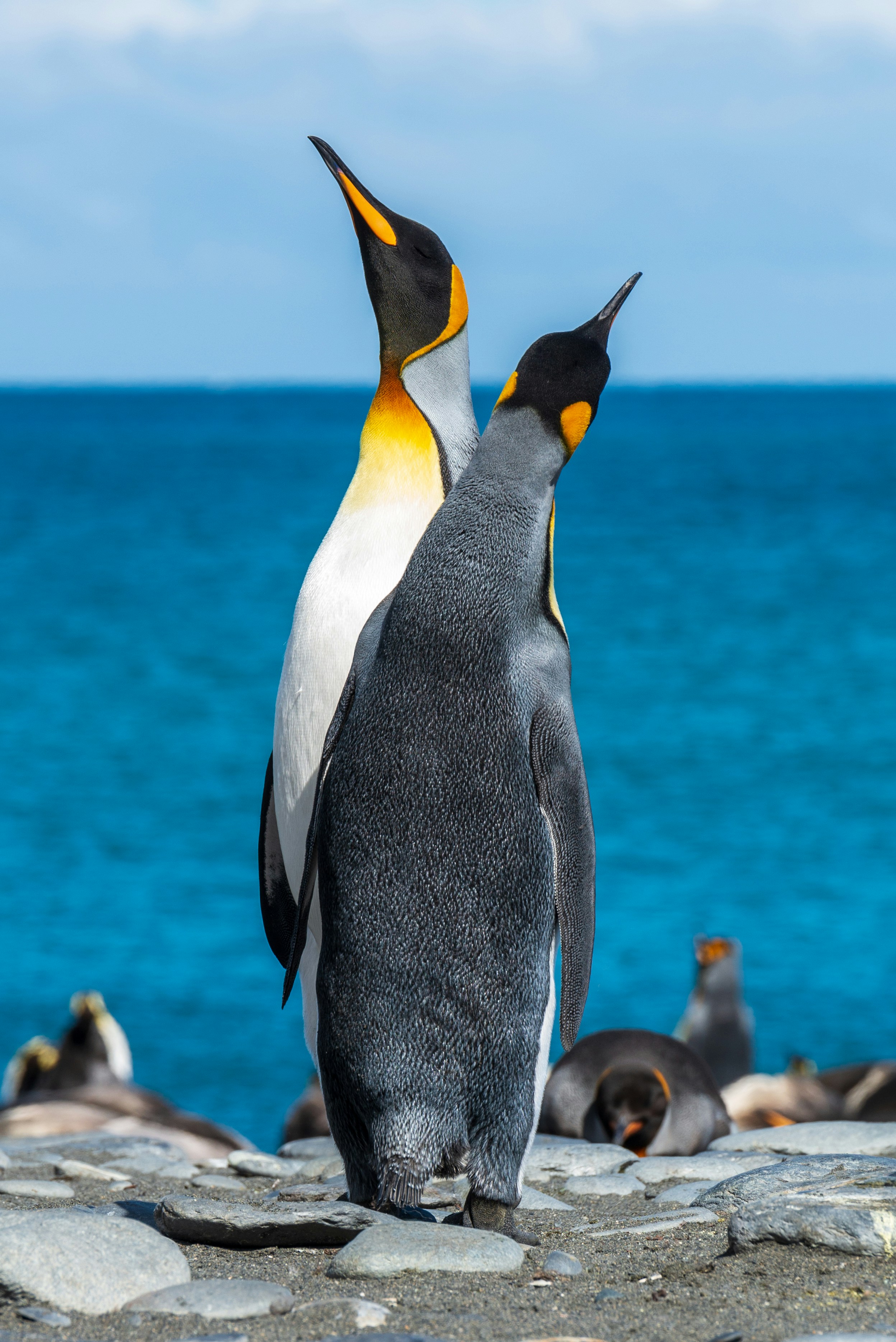
The emperor penguin — the tallest, heaviest, and arguably most beloved penguin on Earth — is now officially an endangered species. The International Union for Conservation of Nature (IUCN) announced the uplisting on April 9, 2026, moving the species from Near Threatened to Endangered on its Red List of Threatened Species.
The decision did not come as a surprise to polar researchers, but it landed with force. It marks the first time an Antarctic seabird this prominent has reached Endangered status, and it sends a stark signal about the pace of climate change at the bottom of the world.
Why Emperor Penguins Are in Trouble
The short answer is sea ice loss. Emperor penguins depend on stable seasonal sea ice for virtually every stage of their life cycle — breeding, raising chicks, moulting, and feeding. When sea ice breaks up too early in spring, chicks that have not yet developed waterproof feathers can drown or freeze. When it forms too late in autumn, adults struggle to find suitable breeding platforms.
Antarctic sea ice has been in sharp decline since 2016, and the consequences have been severe. According to the IUCN, nearly half of all known emperor penguin colonies throughout Antarctica have experienced increased or even complete breeding failure in recent years.
Satellite monitoring data show that the species lost roughly 10 percent of its global population between 2009 and 2018 — more than 20,000 adult penguins gone in under a decade. Climate projections suggest the population could halve by the 2080s if current warming trends continue.
What the IUCN Red List Change Means
The IUCN Red List is the world's most comprehensive inventory of the conservation status of plant and animal species. An Endangered listing does not, by itself, create legal protections, but it carries enormous scientific and political weight. It tells governments, treaty bodies, and conservation organizations that a species faces a very high risk of extinction in the wild.
Alongside the emperor penguin, the IUCN also uplisted the Antarctic fur seal to Endangered in the same announcement, citing overlapping climate pressures on Southern Ocean ecosystems.
The Science Behind the Decline
Emperor penguins breed during the Antarctic winter — the coldest, darkest months on Earth. Males famously huddle together for weeks on the sea ice, balancing eggs on their feet while females travel to open water to feed. The entire cycle depends on a predictable rhythm of ice formation and breakup.
Climate change is disrupting that rhythm. Warmer ocean temperatures are thinning sea ice from below while shifting wind patterns break it apart from above. In some years, vast stretches of ice that once persisted well into summer are now vanishing weeks ahead of schedule.
The 2022-2023 Antarctic summer saw the lowest sea ice extent ever recorded, and the years since have offered little recovery. Researchers have documented colonies where thousands of chicks perished in a single season because the ice platform collapsed before fledging.
What Can Be Done?
Conservation groups and scientists say the most important intervention is the most obvious and the most difficult: reducing global greenhouse gas emissions. Unlike species threatened by poaching or habitat clearing, emperor penguins face a problem that cannot be solved with fences or park boundaries. Their habitat is the climate itself.
There are, however, supporting actions that can help:
- Marine Protected Areas: Expanding protected zones in the Southern Ocean to shield penguin feeding grounds from industrial fishing and other pressures
- Monitoring: Scaling up satellite tracking and on-the-ground colony surveys to detect population changes earlier
- Fisheries management: Reducing competition for krill, the tiny crustacean that forms the base of the Antarctic food web
- International treaties: Strengthening commitments under the Antarctic Treaty System and the Paris Agreement
A Warning From the Ice
Emperor penguins have survived ice ages, volcanic eruptions, and millions of years of natural climate variation. What they have not faced before is the speed of modern warming. The IUCN's decision is both a scientific assessment and a cultural alarm: if the planet's most cold-adapted bird cannot keep pace with change, few species in the Southern Ocean can.
BirdLife International, the authority behind the Red List assessment, put it plainly: climate change is no longer a future threat for emperor penguins — it is a present emergency.
Share this post to spread awareness, and follow our coverage for more updates on wildlife and climate science.

Image sources: Unsplash and Pexels (royalty-free).
Post a Comment