Four astronauts are safely back on Earth after traveling farther from our planet than any human in history — and the journey is only beginning for NASA's ambitious return to the Moon.
On the evening of April 10, 2026, NASA's Orion spacecraft — named Integrity by its crew — splashed down in the Pacific Ocean off the coast of San Diego, California, at 8:07 p.m. EDT. The moment marked the successful conclusion of Artemis II, a 10-day lunar flyby mission that returned humans to deep space for the first time since Apollo 17 in December 1972.
Commander Reid Wiseman's voice crackled over the radio moments after splashdown: "What a journey. We are stable. Four green crewmembers." With those words, a new chapter in space exploration was officially written.
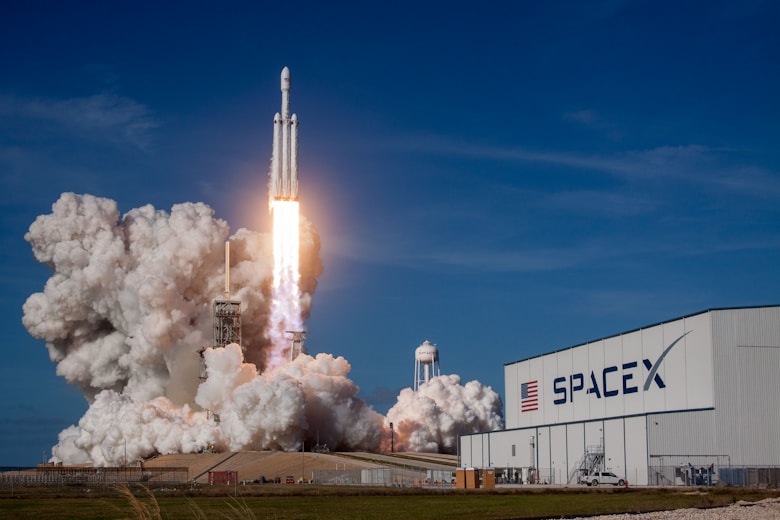
Image credit: Unsplash / NASA rocket launch (representative image)
A Crew That Made History
Artemis II carried four astronauts on the most ambitious crewed spaceflight in over half a century. The crew included NASA astronauts Reid Wiseman (commander), Victor Glover (pilot), and Christina Koch (mission specialist), alongside Canadian Space Agency astronaut Jeremy Hansen (mission specialist).
Each crew member brought a unique dimension to the mission. Victor Glover became one of the astronauts to travel farthest from Earth, building on his experience as a pilot aboard the SpaceX Crew-1 mission to the International Space Station. Christina Koch, who previously set the record for the longest single spaceflight by a woman during her 328-day ISS mission, added another landmark to her resume. And Jeremy Hansen's inclusion made Canada a participant in humanity's return to deep space — a first for the nation.
The Mission: 10 Days Around the Moon and Back
Artemis II launched on April 1, 2026, at 6:35 p.m. EDT from Launch Pad 39B at NASA's Kennedy Space Center in Florida, riding the massive Space Launch System (SLS) rocket — the most powerful rocket ever to fly. The 322-foot vehicle performed flawlessly, sending the Orion spacecraft on a trajectory toward the Moon.
Over the course of the mission, the crew put Orion through an exhaustive series of tests, evaluating the spacecraft's life-support, propulsion, power, thermal, and navigation systems in the harsh environment of deep space. These tests were critical: the data gathered will directly inform Artemis III, the mission that aims to land astronauts on the lunar surface.
Key mission milestones included:
- April 5: Orion reached the lunar sphere of influence, and crew members demonstrated their spacesuits in preparation for the flyby.
- April 6: The spacecraft flew around the far side of the Moon, reaching its closest approach at approximately 4,067 miles above the lunar surface while traveling at roughly 60,863 mph relative to Earth.
- April 7: The crew made a long-distance call from deep space and began the return journey to Earth.
- April 8: Key system tests were conducted during the homeward leg of the trip.
- April 9: Final preparations for re-entry, including stowing equipment, reviewing weather data, and a trajectory correction burn at 9:53 p.m. EDT.

Image credit: Unsplash / Lunar surface as seen from orbit (representative image)
Breaking Apollo's Record
Perhaps the most dramatic achievement of Artemis II was a new distance record for crewed spaceflight. The Orion spacecraft reached a maximum distance of 252,756 miles from Earth — surpassing the Apollo 13 record of 248,655 miles set in April 1970 by more than 4,100 miles.
While Apollo 13's record was set during an emergency that forced the crew to swing around the Moon on a free-return trajectory, the Artemis II crew achieved their milestone by design. It was a planned, controlled demonstration of what the Orion spacecraft and its crew could accomplish together.
A Heart-Stopping Re-Entry
The final hours of Artemis II were among the most critical. Returning from lunar distance means entering Earth's atmosphere at approximately 23,864 mph — far faster than spacecraft returning from the International Space Station. The crew experienced forces of up to 3.9 Gs during the re-entry sequence.
The timeline unfolded with precision. At 7:33 p.m. EDT, the service module separated from the crew module. A final trajectory adjustment burn fired at 7:37 p.m. Then came six minutes of communications blackout beginning at 7:53 p.m. as superheated plasma enveloped the capsule. Drogue parachutes deployed at approximately 22,000 feet at 8:03 p.m., followed by the three main parachutes at 6,000 feet one minute later. At 8:07 p.m., Integrity touched down in the Pacific, where the USS John P. Murtha stood ready for recovery operations.
What Artemis II Means for the Future
Artemis II was never just about flying around the Moon. It was a proving ground — a mission designed to validate every system that will be needed when astronauts actually set foot on the lunar surface during Artemis III, currently planned for later in the Artemis program's timeline.
The Orion spacecraft's heat shield, which must withstand temperatures of nearly 5,000 degrees Fahrenheit during re-entry, was put to its most rigorous test yet with a crew aboard. Life-support systems that will keep astronauts alive on longer missions were stress-tested in real deep-space conditions. Navigation and communication systems were verified across distances where even light takes more than a second to travel.
Beyond the technical achievements, Artemis II carries symbolic weight. It signals that the long gap since Apollo was not the end of human deep-space exploration — it was a pause. The Artemis program envisions sustainable lunar exploration, eventually using the Moon as a stepping stone toward Mars.
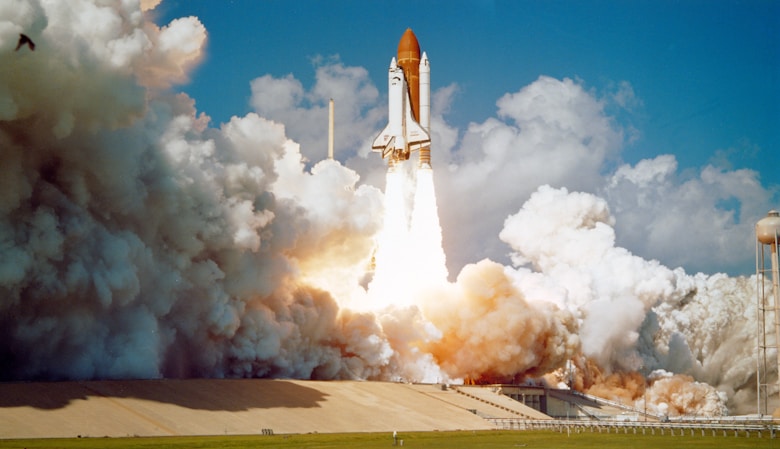
Image credit: Unsplash / Astronaut in deep space (representative image)
Global Collaboration in the New Space Age
The inclusion of Canadian astronaut Jeremy Hansen on Artemis II underscores the international nature of the Artemis program. Through the Artemis Accords, signed by dozens of nations, NASA has built a coalition of partners committed to peaceful and cooperative lunar exploration. The European Space Agency provided the service module that powered Orion throughout the mission, making Artemis II a truly multinational achievement.
As the crew recovers and NASA engineers begin poring over the mountains of data collected during the flight, the space community is already looking ahead. Artemis III aims to land the first woman and the next man on the Moon. Beyond that, the Gateway space station — a planned outpost in lunar orbit — will serve as a hub for longer and more complex missions.
Why This Matters to You
Space exploration has always been about more than rockets and orbits. The technologies developed for Artemis are already finding applications in medicine, materials science, communications, and environmental monitoring. Every dollar invested in deep-space exploration has historically returned multiple dollars in economic value through spinoff technologies and industries.
More importantly, Artemis II reminds us what humanity can achieve when ambition meets engineering and international cooperation. In a world often defined by division, four people from two nations just traveled a quarter of a million miles from home — and came back safely to tell the story.
Follow the Artemis program's next steps at nasa.gov/artemis, and share this article if you believe the Moon is just the beginning.
Post a Comment